Why We Make Our Own Yarns
One of my favorite things that Manny says when talking about our materials is, “We make our own yarns.” Now, we don’t have sheep living in the back of our workshop, so what do we mean by this? How do we make our own yarns? The short answer is plying. The longer reason why is everything that plying makes possible.
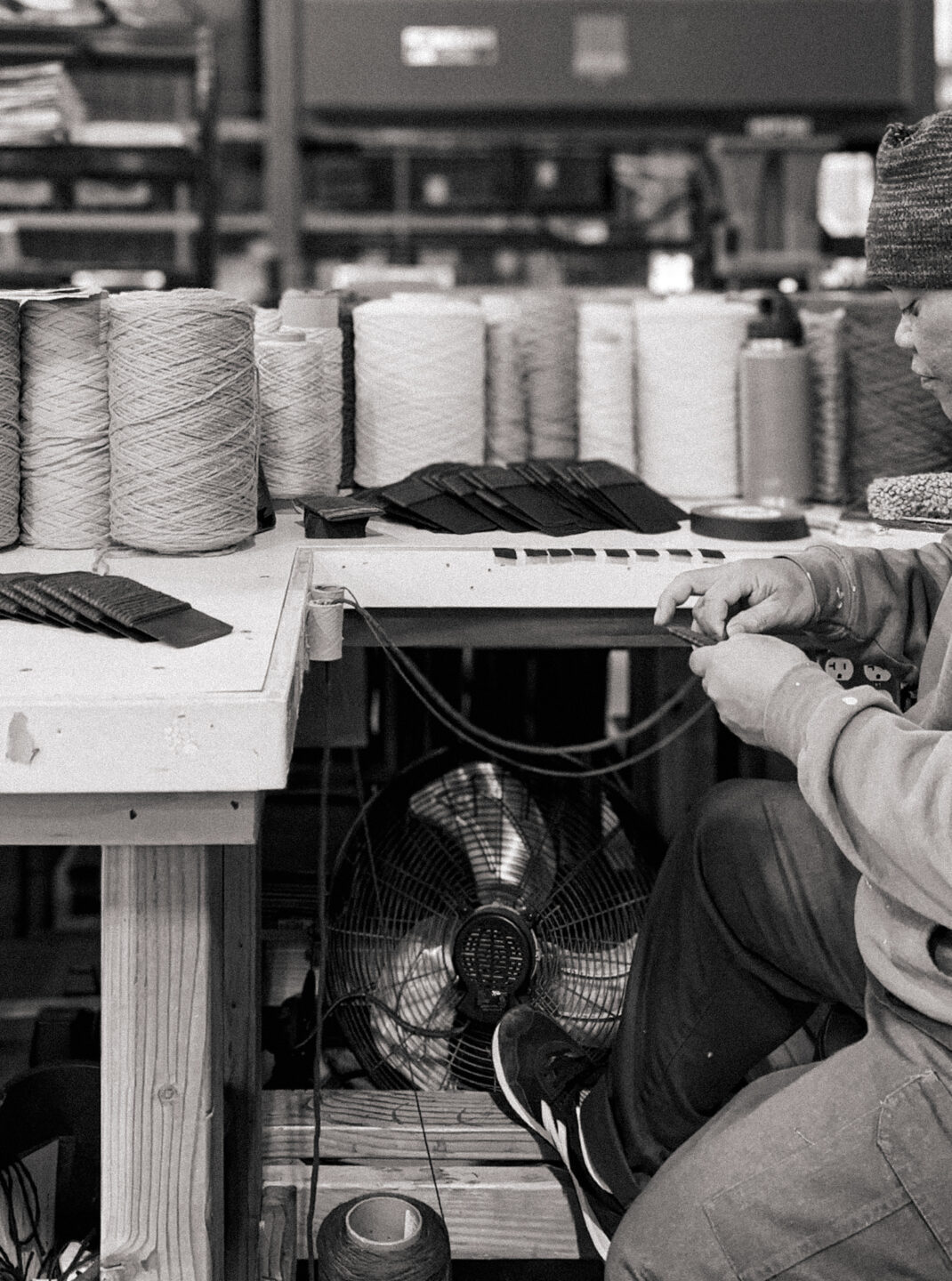
Plying is the process of combining multiple yarns into a single new yarn. We start with eleven distinct yarns in our library, each with its own texture, weight, and way of holding light. Linen feels dry but carries a high shine and deep shadow. Silk wool has a similar sheen, but it’s softer—plusher in the hand. Alpaca merino brings bounce and warmth. Mohair blurs light rather than reflecting it cleanly. When we combine these yarns, we’re not just mixing fibers—we’re building new material behavior.
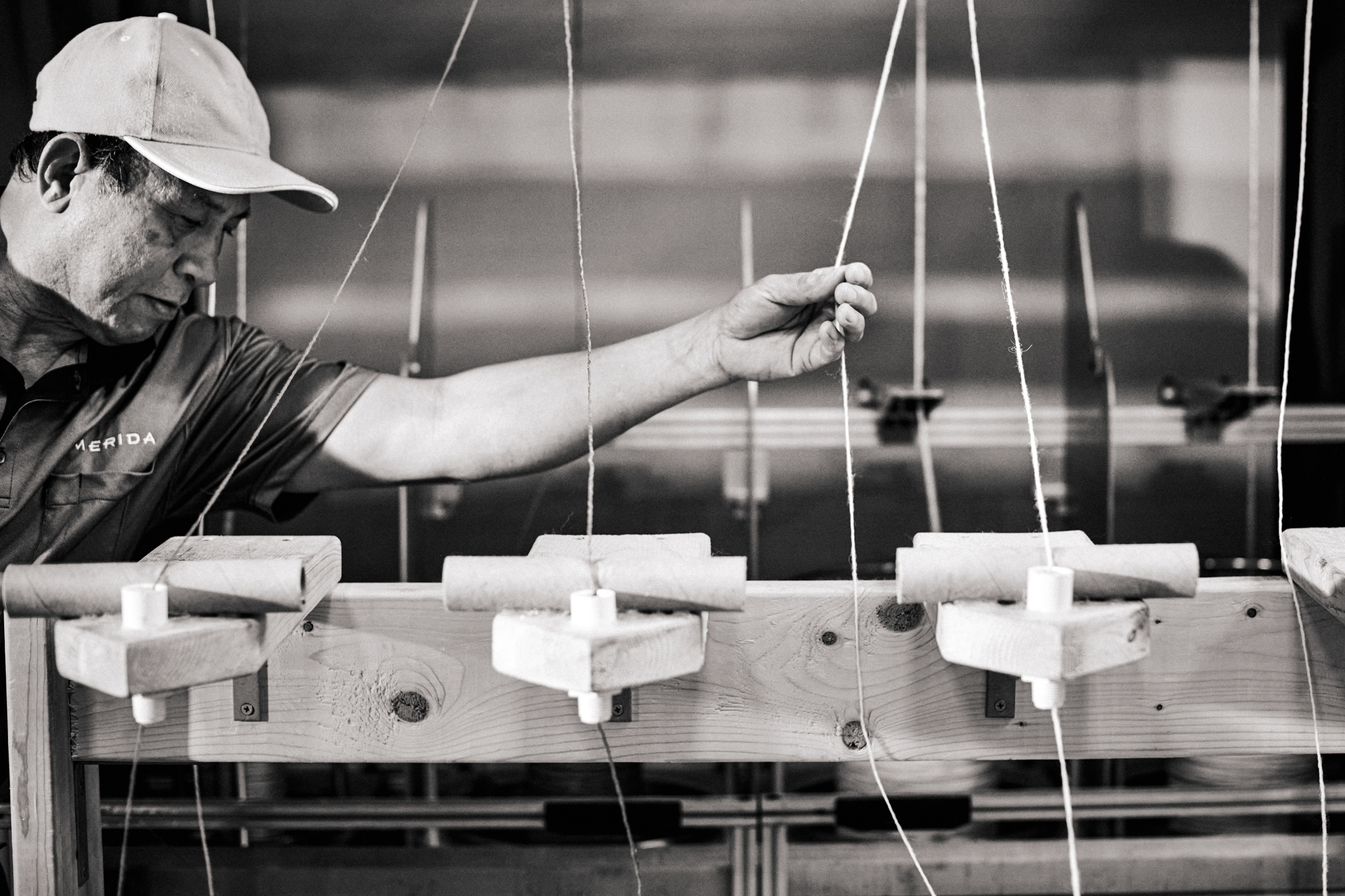
One of my favorite things is hearing Rich explain how plying actually works. It’s not simply twisting strands together—wrapping one yarn around another won’t hold. Each strand has to be untwisted first, then twisted together so that when they recoil, they lock into place, like a coiled telephone cord. Even our crimped wool is already plied; its bubbly texture comes from two strands moving at different speeds and tensions, allowing the thicker strand to bunch while the thinner one binds it in place.
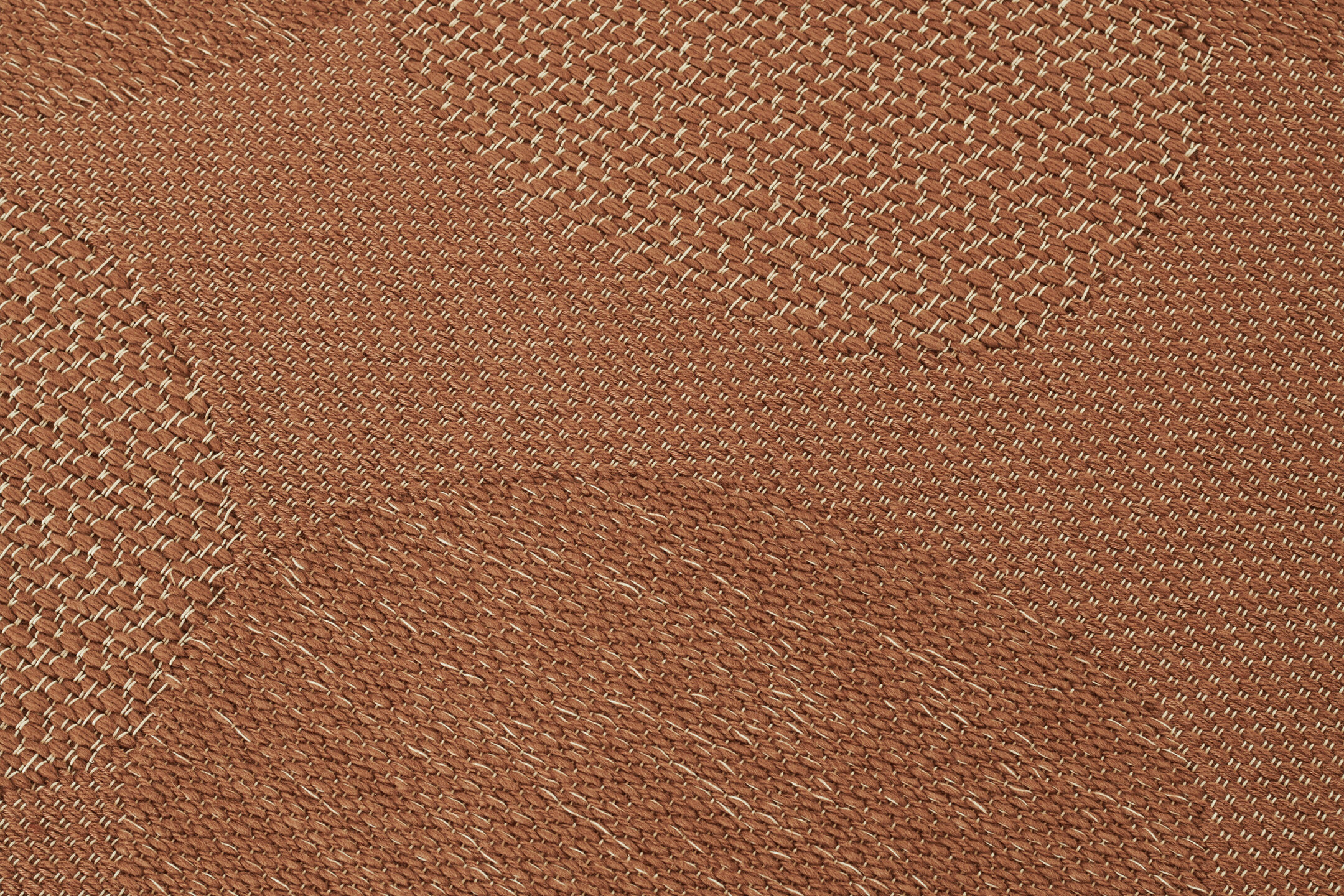
I love looking into the small pockets of each piece to find the magic of mixing occuring within. In Convex (2021), silk wool and alpaca merino are plied together to create a yarn with soft sheen and elasticity—something that feels alive underfoot (One of my favorite combinations, I’ll say. I wish I could sleep on a bed of it.) In Saga 218 (2018), linen is paired with mohair, creating a surface where sharp contrast and hazy light coexist, almost like something drifting in and out of focus. Even the twist of a plied yarn matters: as it moves through the weave, it creates a subtle, organic wave. The yarn brings its own personality to the textile, and we welcome that. We never fully control the fibers—and that aliveness is part of the beauty.
Plying also deepens our color work. Each fiber takes dye differently, already creating variation within a single hue. But when we ply yarns together, that variation and depth compound. I was once told by an art teacher that you should never paint straight from the tube—you mix your own colors to create depth. Plying works the same way. In Moonglow, for example, felted wool, linen, and mohair are combined in two closely related colors. The result is a surface that subtly shimmers, not simply because of the way the light is hitting it, but because the color is optically mixed within the weave itself.
We make our own yarns because it expands what we can express—through texture, through color, through touch. Whether a piece belongs to the Studio Series, the Atelier Period, or one of our other artist series, that material complexity is always there, supporting the structure of the weave and giving the textile its depth. It’s one of the quiet decisions that shapes everything we make.