Why We Make Yarn Cards
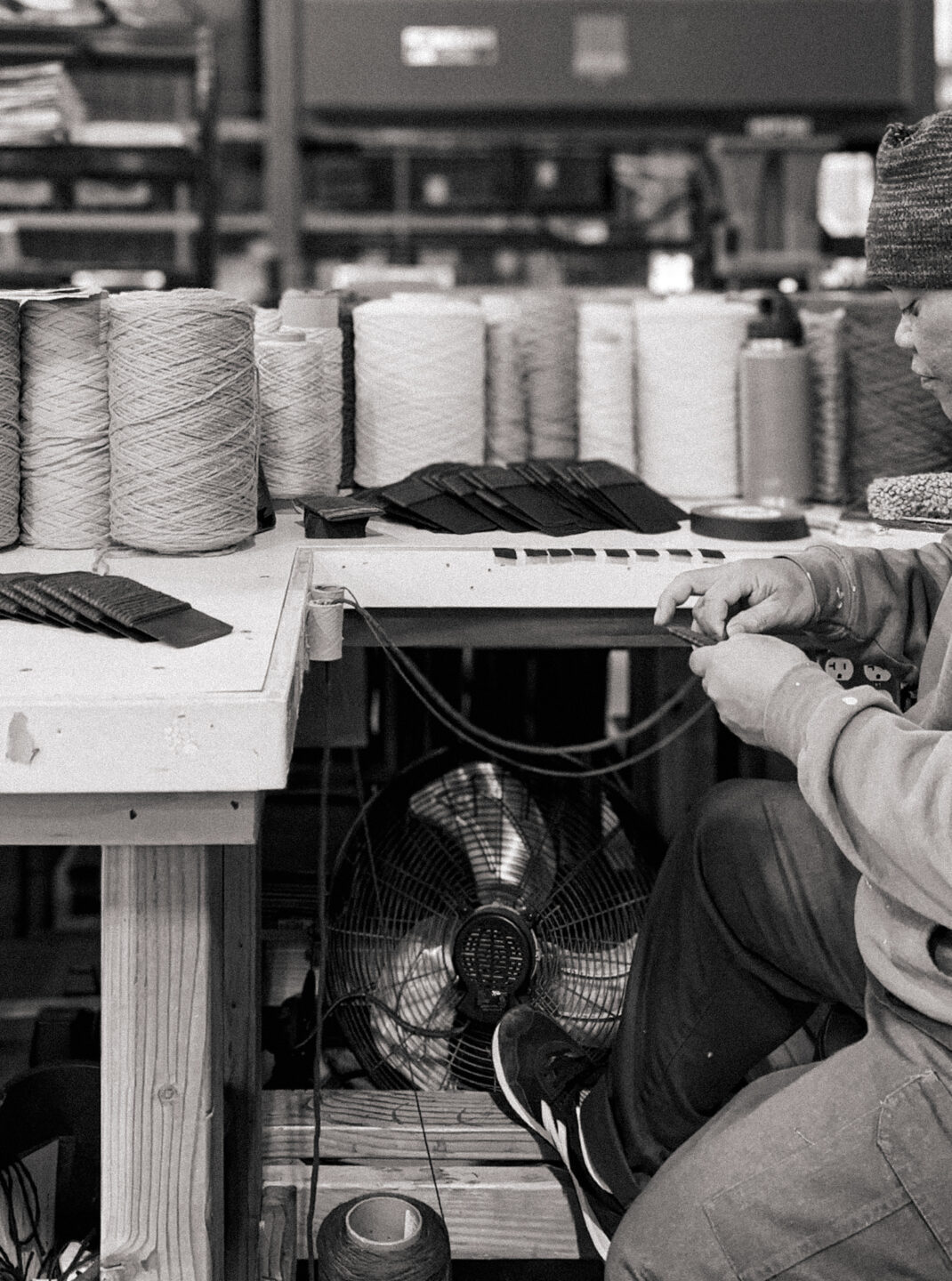
The other week, I stopped beside Phonn as he worked on a new set of Aka yarn cards. His table looked almost like a rudimentary loom—each yarn pulled taut, arranged so cleanly that not a strand could tangle. He had arranged the spools, pre-cut every snippet of tape, and created a system that allowed him to move fluidly, never setting the yarn down. You could tell he’d made hundreds of these.
Watching him work made me pause and ask myself again: Why do we make these at all? Most rug makers rely on poms. They’re faster. Simpler. And for many types of rugs—tufted, cut pile, or flat weaves using a single yarn—they do exactly what’s needed: show color.
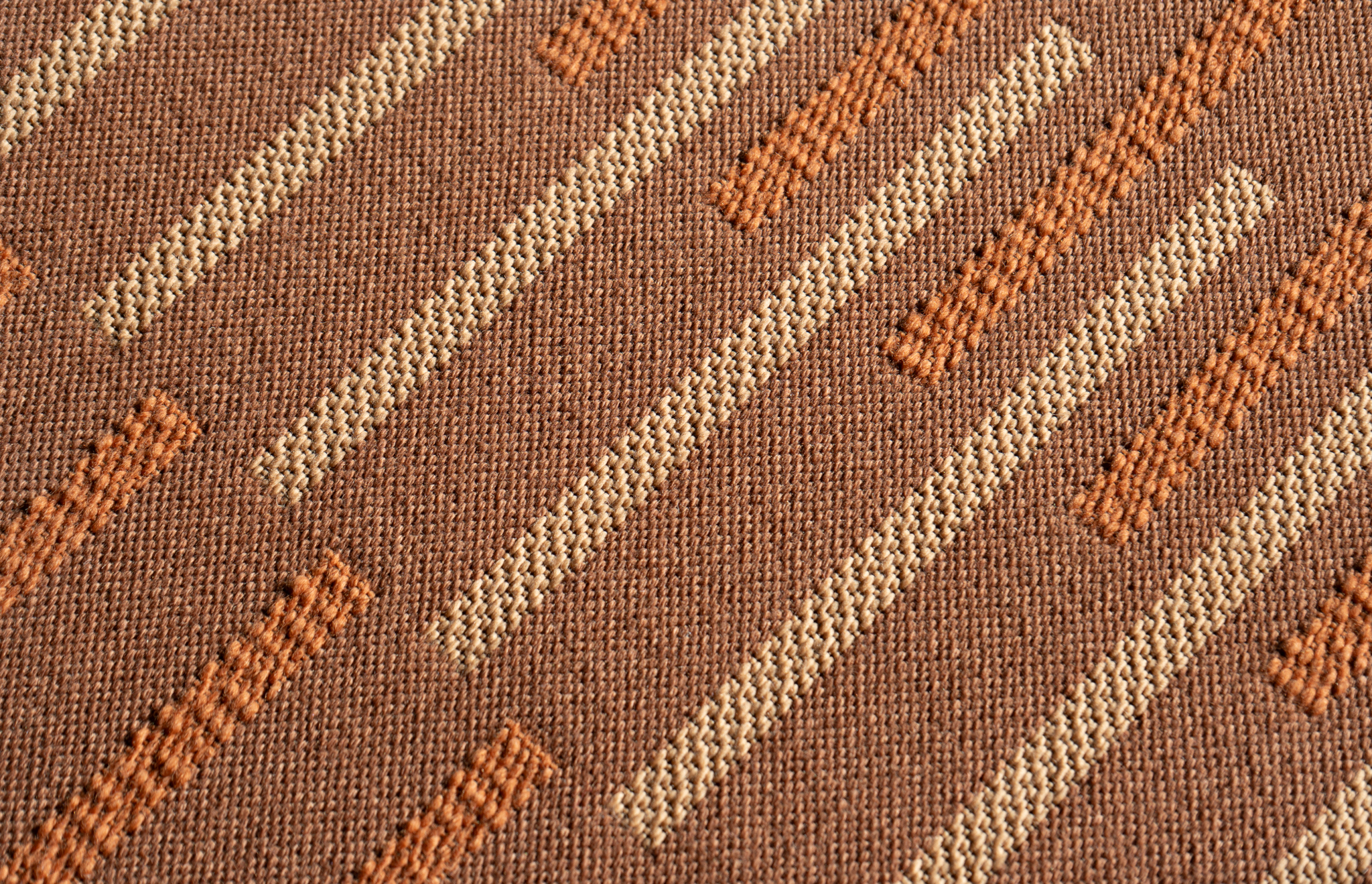
Most rug makers rely on poms because their materials and constructions allow for it. If a rug is made from a single yarn type—like a cut-pile tufted rug or a simple flat weave—showing one swatch of that yarn is enough to communicate the color and texture. Our textiles work differently. They aren’t built from a single ingredient, and while other makers may focus solely on pattern, we deepen ours through texture. Every Merida Studio rug uses multiple yarns, often plied together, and the character of a color depends on how those yarns interact. Showing a single strand wouldn’t convey the depth, variation, or structural nuance that’s actually present in the final piece.
That’s why our yarn cards exist. Each one is a small composition in itself—designed by Sylvie Johnson, who has shaped our palette over eight years. She chooses not only the colors, but the exact yarn combinations that reveal the essence of a hue. It’s a study in how color lives inside fiber, not just on its surface.
Standing at Phonn’s table, seeing the care that goes into making each card by hand, I was reminded that these aren’t just tools for color selection.
They’re a way of understanding our textiles.
A way of seeing the full potential housed in every fiber.
A way of entering the world our rugs are made from.
This is just a glimpse into the quiet decisions and daily practices that shape our materials and, ultimately, our work.